Practice-based research stream
Mindful Creative Labs
What changes when the conditions of perception change?
Where this stream came from
Before there were Labs, there were workshops.
Mindful Creative Labs grew from Charles Mindful Wellness’s earlier Mindful Creative Workshop practice, including a 2023 workshop series at Martin Luther King Jr. Memorial Library in Washington, DC.
Those sessions combined mindfulness, creative practice, attention, making, and structured reflection in a public-library environment.
What traveled forward were the questions.
- What happens when judgment is delayed?
- What becomes available under sustained attention?
- How much can a frame change meaning when the object stays the same?
- What happens when different people produce different information from the same encounter?
- What becomes possible when something difficult to articulate is given material form?
The stream
The question
We do not encounter the world all at once. Attention selects. Sequence frames. Materials constrain. Language interprets. Bodies respond. Other people redirect what we notice. What looks obvious under one condition turns strange under another.
The question is how conditions of attention, interpretation, constraint, sequence, embodiment, and creative action shape what people perceive and what they are able to imagine. The distance between seeing and noticing, noticing and interpreting, interpreting and judging, judging and making, making and understanding is part of the inquiry. A Lab changes one part of that sequence and watches what becomes available.
Each Lab begins with one question about a habit of mind that usually goes unexamined, gives a group a real constraint to work inside, and lets making produce information. Participants do not need to identify as artists. Making is a mode of inquiry here, and nothing made is judged for quality.

Every Lab runs in 60-, 90-, or 180-minute forms. The core inquiry stays the same across all three. What changes is how many times the group encounters the altered condition, and how far the reflection and application go.
Five labs · 60 / 90 / 180 minutes · available for booking
The five Labs
-
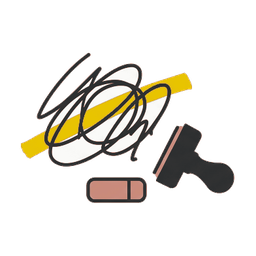
Make Before You Judge
Central question: What becomes possible when evaluation comes after exploration rather than during it?
Applications: Creativity, experimentation, perfectionism, innovation
Interrupts premature self-evaluation, so participants experience creating before deciding whether an idea is good.
-

Attention Changes the Object
Central question: How does sustained attention change what becomes available to us?
Applications: Focus, mindfulness, observation, decision-making
Slows perception down until what recognition usually skips over becomes visible again.
-

Change the Frame
Central question: What happens when the thing doesn't change but its frame does?
Applications: Perspective-taking, problem-solving, organizational change
Shows a group how far meaning moves when context shifts and the object itself stays fixed.
-
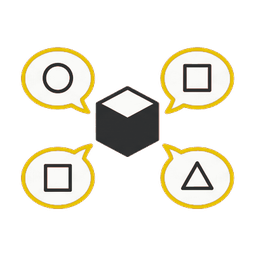
Many Things Can Be True
Central question: How can people encounter the same thing and produce genuinely different information?
Applications: Teams, communication, perspective, belonging
Holds multiple honest observations visible at once, instead of letting the group rush to one consensus account.
-
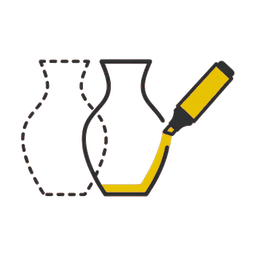
Make the Invisible Visible
Central question: How do we give form to something we know but cannot easily articulate?
Applications: Values, team retreats, visioning, leadership development
Externalizes something a group already senses but has never had to put into shared, visible form.
The subject
Mindful creativity
Mindful creativity means making while staying in contact with what is happening in attention, body, material, and judgment. It applies the core move of mindfulness (notice before immediately judging or fixing) to the act of making.
- Process over outcome. The value sits in the attention paid while creating, not only in the finished product.
- Non-judgmental awareness. You notice the impulse to critique, compare, or rush, and you let the impulse pass instead of obeying it.
- Embodiment. Paying attention to breath, sensation, and physical impulse becomes part of the creative act itself.
- Openness to what arises. Rather than forcing a predetermined idea, mindful creativity stays responsive to what shows up unplanned, including mistakes, and treats them as information rather than failure.
Who this is for
Libraries, museums, schools and universities, cultural organizations, nonprofits, workplaces, leadership programs, affinity groups, community organizations, and teams looking for a facilitated encounter with a real question behind it.
A Lab can function as public programming, professional learning, staff development, community engagement, or a designed inquiry inside an institution.
No shared vocabulary is required. What matters is a question worth encountering.

Public specification
Every Lab publishes its research logic in the same shape. Familiar condition, what currently organizes the experience. Underlying structure, the assumption or pattern that condition may sustain. Alteration, what changes. Hypothesis, what difference the alteration might make. What it tests, which larger proposition about conditions, agency, perception, participation, or emergence is at stake. Encounter, what participants actually do. Complication, what the Lab does not claim and what could make the hypothesis wrong.
After documented runs, the record can add field traces, observed consequences, absences, contradictions, uneven effects, emergent effects, and revisions.
Make Before You Judge, as currently specified
- Familiar condition
- Creating and evaluating happen at the same moment.
- Underlying structure
- Early judgment may narrow exploration before an idea has enough form to be considered on its own terms.
- Alteration
- Evaluation is deliberately delayed during the first making cycle.
- Hypothesis
- If evaluation arrives later, participants may produce a wider range of responses, notice their evaluative habits more clearly, and meet uncertainty or imperfection differently.
- What it tests
- Conditional emergence. The relationship between evaluative timing and creative possibility. Conditional agency over judgment.
- Encounter
- Participants make twenty distinct marks with no erasing, build an impossible object out of them, and witness each other using three sentence stems: I notice, I did not expect, I am curious. Nothing made has to be good and nobody has to explain what they made.
- Complication
- Delayed judgment is no better than evaluation in itself, and evaluation is necessary in many forms of work. The Lab does not measure creativity, diagnose perfectionism, or claim that withholding judgment solves creative inhibition.
Licensing
Available for organizations that want to deliver this work internally. Replication follows evidence. A method is not treated as fully licensable until repeated delivery makes clear which elements stay stable, which need facilitator judgment, which need local cultural adaptation, and which stay under direct stewardship.
Booking and inquiries · Connect
Where to go from here
Choose the question worth encountering
- Make Before You Judge
- Attention Changes the Object
- Change the Frame
- Many Things Can Be True
- Make the Invisible Visible
Funding, partnership, press, or something that is not a booking? Start here.