Charles Mindful Wellness
Research Program
What changes when the conditions change?
Every environment organizes experience before anyone chooses what to do inside it: a classroom organizes attention, a party sociability, a workplace time and authority, a digital platform visibility, and a yoga class bodies, sensation, effort, and response.
Alter one familiar condition. Hold the rest as stable as the form allows. Let people encounter the change. Document what becomes possible, difficult, visible, costly, or newly questionable.
A condition is a distributed configuration of rules, arrangements, affordances, expectations, infrastructures, bodies, histories, and power. Conditions make some actions easier, harder, legible, costly, or imaginable without fully determining what anyone will do.
Change how someone attends to an object and the object can become strange again. Change one rule of a gathering and the agreements around it can become easier to see.

Claims
What we currently think
Provisional claims under investigation. They can be revised, contradicted, or abandoned by what the work encounters.
Conditions shape emergence
Material, bodily, sensory, spatial, temporal, social, technological, institutional, cultural, economic, and interpretive conditions act together. They shape what can emerge without fully determining it.
Participation is consequential, unevenly
Participation is how a person’s presence, action, interpretation, relation, observation, contribution, refusal, or withdrawal enters the situation as it unfolds. People occupy different positions inside the same environment. They do not hold equal ability to set its conditions, change its rules, influence others, refuse without penalty, or determine its outcome.
Agency is conditional
Agency does not require complete control. It can begin with recognizing what is and is not presently available to influence: attention, interpretation, breath, movement, disclosure, distance, pace, response, relationship, rule, institution. The intervention may be internal or interpersonal; sometimes the condition itself has to change, and sometimes only collective action can change it.
Participation can reshape conditions
What follows from participation can become part of the next condition. That recursion is asymmetrical. Power decides whose participation becomes consequential, at what scale, at what cost, and for how long.
Not every intervention matters
An altered condition can produce a large effect, a small one, a delayed one, an uneven one, an unintended one, or no meaningful effect at all. A null result is still information.
Practice before theory
Before there was a Research Program, there were rooms.
The questions came out of practice before any theory was written.
Yoga classes. Teacher trainings. A public-library workshop series. A recurring book club. A nude practice built around consent and privacy. LGBTQ community facilitation. Schools and summer programs. Years of deciding what happens first, who gets to speak, what someone is allowed to refuse, what a class asks a body to do, and which parts of an experience the facilitator can actually change.
Some of those recurring environments are now Practice Sites: sustained practices whose conditions continue to generate questions through use, return, and revision.
- COURAGE: Nude Yoga
- Brother to Brother Book Club
The shared method
Eight steps, one recursive method

Two active streams use the same method on different conditions. Mindful Creative Labs works on creative and perceptual conditions. Experiments in Being Together works on social ones.
- 01
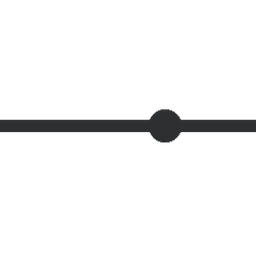 FAMILIAR CONDITIONthe arrangement already organizing experience
 - 02
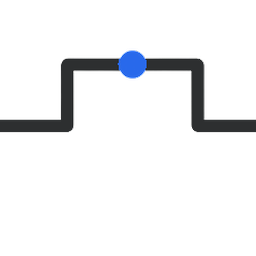 ALTERATIONone part changes deliberately
 - 03
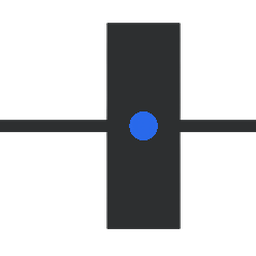 EMBODIED ENCOUNTERpeople meet the change through bodies, choices, materials, and relation
 - 04
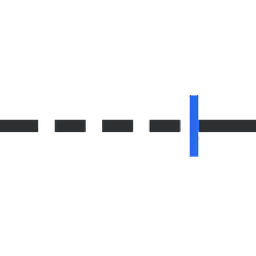 RECOGNITIONsomething previously background becomes perceptible
 - 05
 QUESTIONINGthe group asks what was assumed, optional, imposed, or still unclear
 - 06
 REIMAGININGanother arrangement is rehearsed rather than only discussed
 - 07
 TRACEwhat remains is documented without collapsing observation into interpretation
 - 08
 REFINEMENTthe design changes and the next iteration begins
Protocol and apparatus
The protocol is not the whole apparatus
Protocol names the deliberate alteration and what participants are asked to do. Apparatus names everything that makes the alteration real: room arrangement, timing, objects, interface, sound, signage, entry and exit, facilitator position, consent structure, access conditions, and the other forces people actually encounter.
The experiments are not illustrations of conclusions the program already holds. They have to be capable of changing the program’s own claims.
Practice, evaluation, research
Keep the layers separate
Not every inquiry needs an experiment. A library, museum, school, hospital, courthouse, lecture hall, festival, street corner, studio, transit station, digital room, archive, or temporary gathering can become a site of inquiry. Depending on the question, the work may use field observation, spatial reading, interview and testimony, archival inquiry, sound and visual documentation, facilitated inquiry, participant-generated artifacts, and post-encounter synthesis. A designed alteration is one method among those.
The primary mode is practice-based inquiry: making, facilitation, observation, reflection, and iteration used to develop questions, methods, and provisional propositions. Design rationales, facilitator notes, version histories, public artifacts, field traces, and separately consented participant reflections can shape the next iteration. The accumulating record matters alongside the encounter itself.
Three layers stay separate. Practice-based inquiry can refine methods and generate propositions; on its own it establishes no generalizable causal claim. Program evaluation covers access, delivery quality, participant experience, public benefit, and operational strength. Formal research requires a defined question, protocol, consent structure, ethics determination, data-management plan, analytic method, and the right expertise.
Participation in a Lab, Experiment, or Practice Site is never automatic consent to research, photography, quotation, AI processing, or public archiving. The encounter stays an encounter. Participants carry no responsibility for proving its value.
The research agenda
Open questions

Theory
- What is a condition when it is distributed across rules, bodies, infrastructures, histories, expectations, and power?
- How do conditions constrain without fully determining what emerges?
- What is the relationship among participation, agency, consequence, and power?
- When can participation reshape the conditions that shaped it?
- Which nonhuman actors and infrastructures materially affect an encounter without being assigned human intention?
Experiment
- Which familiar conditions become most perceptible through deliberate alteration?
- What happens when completion, speech, explanation, competition, evaluation, pace, or authority stops working the usual way?
- Which alterations produce meaningful contrast, and which produce none?
Method
- What can embodied participation reveal that verbal explanation alone does not?
- What counts as evidence in practice-based inquiry?
- How do we keep interpretation distinguishable from observation?
- What makes a null result useful?
- Which parts of a condition travel across contexts, and which need local redesign?
Ethics and politics
- Who holds the authority to set a condition, and who can alter or refuse it?
- Who bears the cost of an experiment?
- When does an invitation become coercive?
- When does self-regulation become adaptation to an arrangement that should change instead?
- How does a public trace stay useful without becoming extraction or surveillance?
- How do participants use refusal, observation, silence, movement, making, rest, or alternative communication as legitimate participation?
- Where do altered conditions fail to produce meaningful recognition, and what do those failures reveal about the design hypothesis?
Two streams active
Current streams
Mindful Creative Labs
Facilitated inquiry into how attention, judgment, framing, making, and interpretation shape what people perceive and produce. Workshop-scale, 60 to 180 minutes.
Available for booking The stream page →Experiments in Being Together
Black queer-centered participatory experiments that alter familiar social conditions for the length of a gathering.
Seeking venues and partners The stream page →Future streams join only after their method, ethics, evidence standard, and relation to the central thesis are clear.
Shared standards
 Consent that is specific, ongoing, and revocable rather than assumed from attendance. Refusal, rest, observation, privacy, modification, and exit are designed as real possibilities wherever the form allows them.
 Accessibility built into the design from the start.
 Black queer people centered in the work that was built for and with them; broader participation welcomed on the work’s own terms.
 Evidence built through actual practice and honest evaluation, never claimed in advance of running anything. Evidence and interpretation stay distinguishable, with provenance on both. Null results, contradictions, resistance, and failed conditions remain part of the record.
Organizations are conditions too
- Libraries and public institutions
- How patrons enter, wait, ask, gather, learn, and become visible.
- Museums and cultural organizations
- Attention, interpretation, authority, pacing, and movement.
- Universities and leadership programs
- Evaluation, participation, sequence, knowledge, and belonging.
- Workplaces and community organizations
- Time, authority, care, regulation, and who is expected to adapt.
Where the work has lived
The Research Program is new. The practice behind it is not.
Its questions have been shaped in public libraries, LGBTQ community spaces, schools and youth programs, yoga studios, teacher-training rooms, recurring Black queer community programs, and independent Charles Mindful Wellness practice.
- Public library
- Mindful Creative Workshops at Martin Luther King Jr. Memorial Library helped establish the creative-practice lineage that became Mindful Creative Labs.
- LGBTQ community space
- Four years of facilitation through The DC Center for the LGBT Community raised questions about what a facilitator can change inside conditions they do not own.
- Youth learning environments
- School and summer-program work through Breathing Space and DC public charter schools raised questions about agency, authority, participation, and refusal when attendance and structure are not fully chosen by the young people inside them.
- Teacher training
- Leading and coaching yoga teacher trainings since 2023 raised questions about evaluation, readiness, institutional recognition, imitation, authority, and what it means for someone to become a teacher.
- Recurring Charles Mindful Wellness practice
- COURAGE and Brother to Brother became the first two formal Practice Sites because years of recurrence created enough design history for the conditions themselves to become objects of inquiry.
What we’re seeking

Funding partners. Presenting institutions and venues. Research collaborators. Artists and facilitators. Libraries, museums, universities, community organizations, and workplaces willing to examine the conditions already shaping participation inside their environments. Participants curious enough to enter the work.
You do not need to arrive with a research question already written.
Sometimes the first useful question is simply:
What is this arrangement causing to happen?